| Turn your cell phone into a field-tested satellite tracker. Works for Android and iPhone. | | |
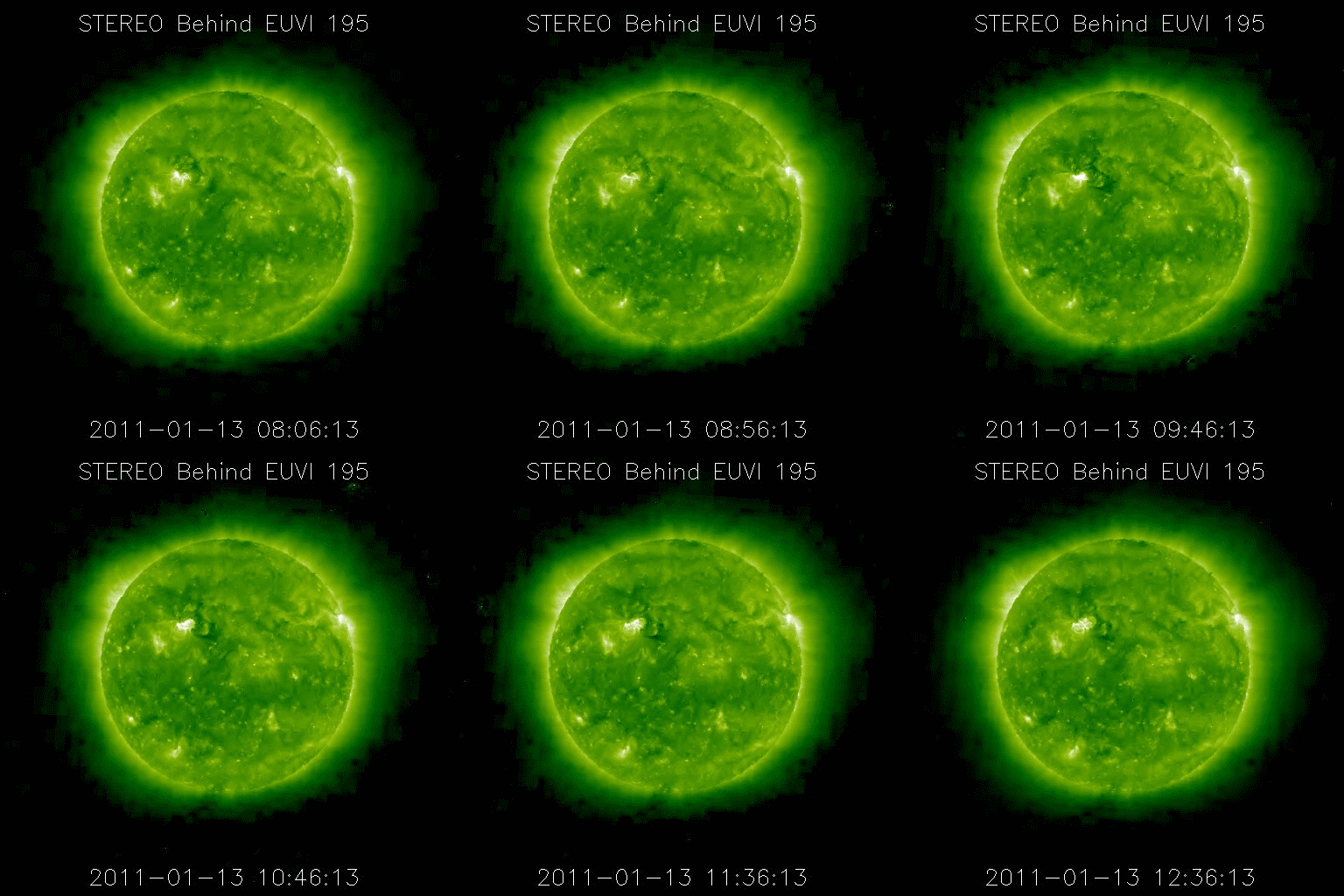
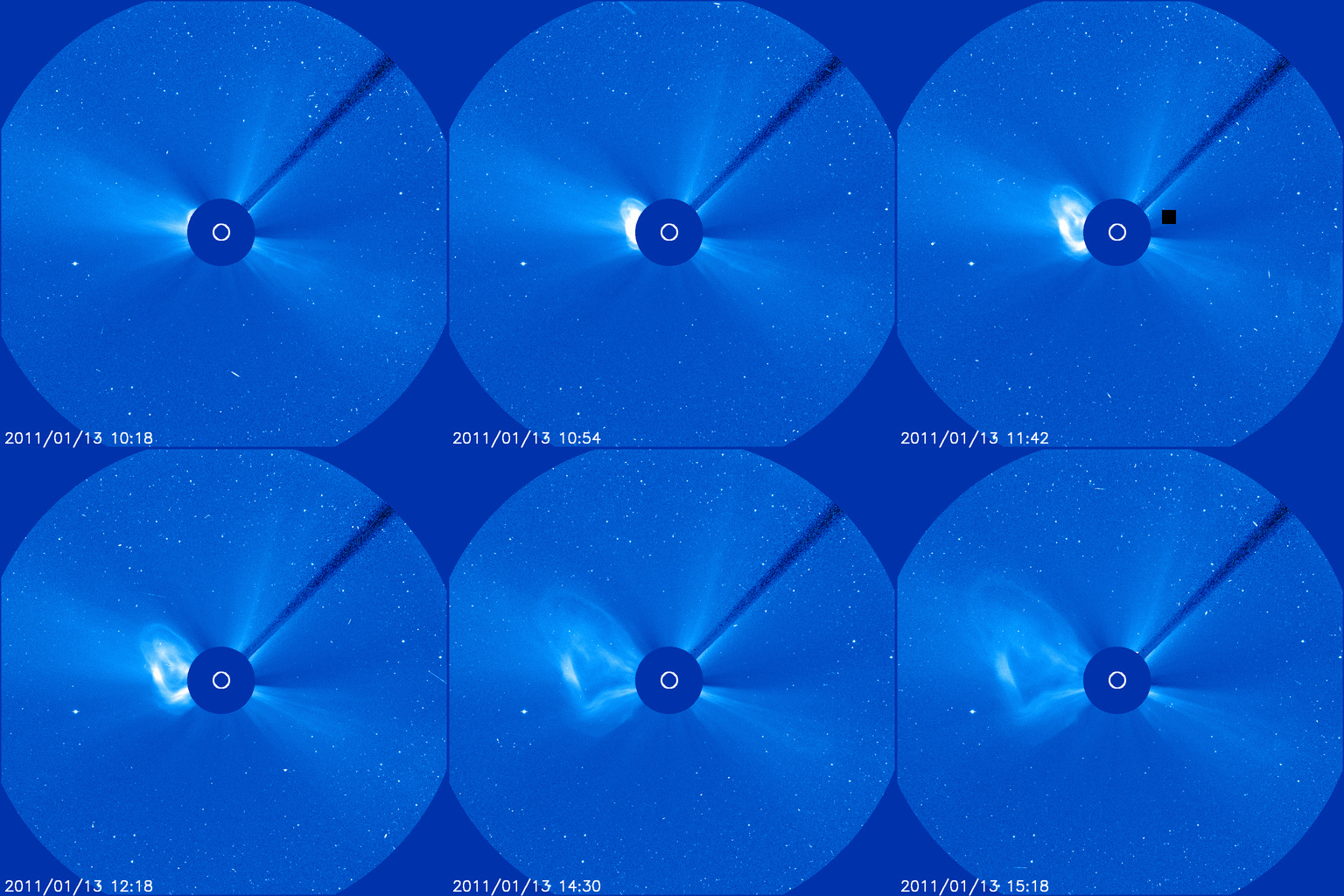
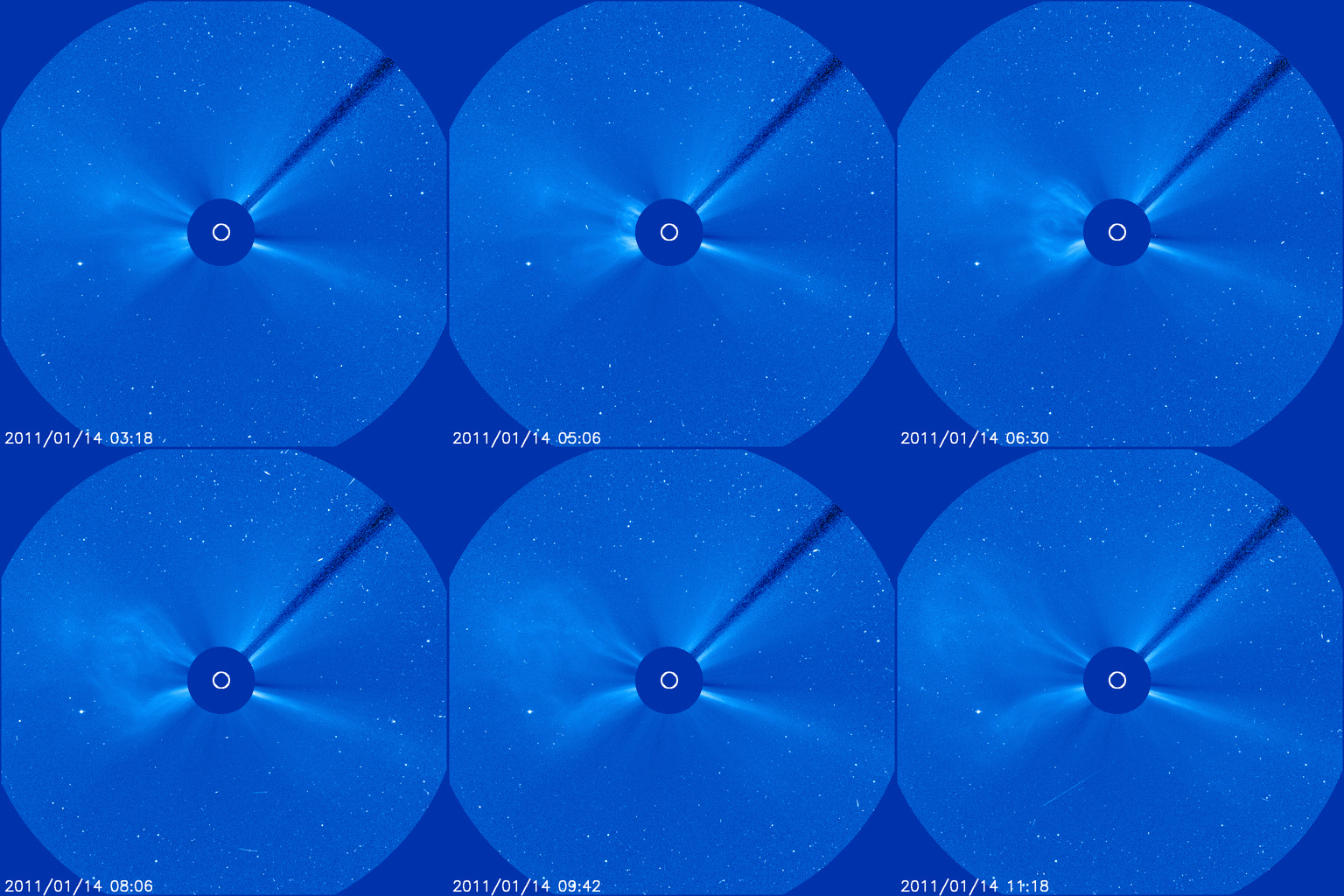
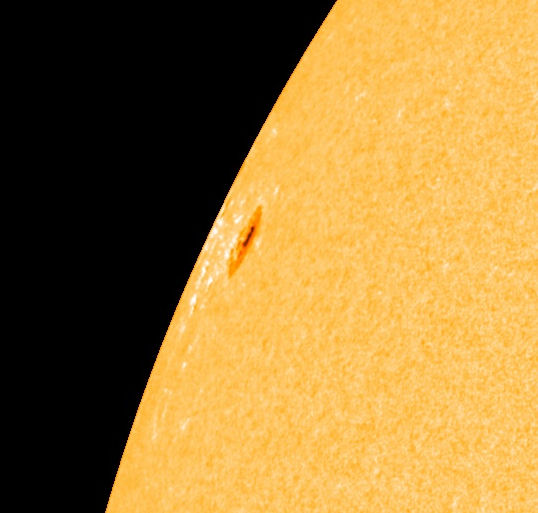
EMERGING ACTIVE REGION: A farside sunspot which has produced a number of strong flares and CMEs in recent days is emerging over the sun's eastern limb. We can now see it from Earth. Click here for a first-look from NASA's Solar Dynamics Observatory.
NORTHERN LIGHTS: A solar wind stream is buffeting Earth's magnetic field and sparking bright auroras around the Arctic Circle. "Last night's display was great," reports Chad Blakley of the Aurora Sky Station in Abisko National Park, Sweden. "We all had high hopes after seeing the predictions on spaceweather.com, and we were not disappointed." He took this picture using a Nikon D7000:
 "The aurora was strong enough to be seen through bright moonlight," he adds. "We are hoping for more great lights tomorrow!"
They might get them. The solar wind is expected to intensify during the next 24 hours as a hole in the sun's atmosphere (a "coronal hole") becomes increasingly geoeffective. NOAA forecasters estimate a 30% chance of geomagnetic activity at high latitudes. Stay tuned.
January 2011 Aurora Photo Gallery
[previous Januaries: 2010, 2009, 2008, 2007, 2005, 2004] SUN PILLAR: "Yesterday at sunrise, a column of light jumped straight up from the sun," says Shulamit Widawsky of Fairfax, VA. "It was not a result of the photography. It really looked like this with the naked eye, and lasted for at least ten minutes. What do you call it?" Scroll down for the answer: This is called a "sun pillar." It is caused by plate-shaped ice crystals fluttering to Earth like leaves falling from trees. Air resistance causes the flat faces of the ice crystals to line up almost parallel to the ground. They catch the light of the morning sun and spread it into a brilliant vertical column. The source of the crystals may be seen in Widawsky's snapshot: icy clouds just above the pillar are responsiible for the display. With air temperatures in the northern hemisphere regularly dipping below freezing, this is a good time of year to see the phenomenon. Look for sun pillars are sunrise and sunset!
Potentially Hazardous Asteroids (PHAs) are space rocks larger than approximately 100m that can come closer to Earth than 0.05 AU. None of the known PHAs is on a collision course with our planet, although astronomers are finding new ones all the time. On January 16, 2011 there were 1183 potentially hazardous asteroids. Notes: LD means "Lunar Distance." 1 LD = 384,401 km, the distance between Earth and the Moon. 1 LD also equals 0.00256 AU. MAG is the visual magnitude of the asteroid on the date of closest approach.
| | The official U.S. government space weather bureau |
| | The first place to look for information about sundogs, pillars, rainbows and related phenomena. |
| | Researchers call it a "Hubble for the sun." SDO is the most advanced solar observatory ever. |
| | 3D views of the sun from NASA's Solar and Terrestrial Relations Observatory |
| | Realtime and archival images of the Sun from SOHO. |
| | from the NOAA Space Environment Center |
| | the underlying science of space weather |
| ![Descripción: []](https://lh3.googleusercontent.com/blogger_img_proxy/AEn0k_s-nzCk2hl7PRoDGsp6YUvnzZkLmlX-7n1ZdOa94gQbgM5SRM34YOyasXsNDxyx1zGoDAi-0HjZn43iwNg09JTsQwBulb8YvS68ooUd9EpbWMQyeRWufgd8XUOYpXAeUFzwXvcjmjwbsNw0lwcF03S41dCuuYO0RYr1lOarUQTox3tIWAIhvtySPGgCEEQ3=s0-d)
![Descripción: []](https://lh3.googleusercontent.com/blogger_img_proxy/AEn0k_tIvFatKFcb4xlRiwCGIHYTaxbKUwUttnYFTbYwxVrlE-WGVpEY1eCjzyA343oHRmbfetyMyvw2i9jZHIwnS-rBeRtTtbhCnSlSu2Ygat6mEdeaPiu16_KH4S-IEftVfc9lznGXGYcr1BuqXQZeUGb0u1HLYnGlpPkx-73nrv_kDohi-si0tjf3np6UgYI=s0-d)
![Descripción: []](https://lh3.googleusercontent.com/blogger_img_proxy/AEn0k_tPtMDfb4yQv367jKII8NB8AFg1uJsG-0Rk65vTedYMikSwBSpBuzzwBLLxci4-SFMRBHctjnILYgnGpOQyQPgziYV6ykOiUI6_DqkJ_ASFC04pMugApTb-d0DTpngzadJLtOxZ8-wAywrwDr-pSng_4oRFf1xEyMmRghnmox5RB1Gl0QZ97dCr7QJBd-iu=s0-d)
![Descripción: []](https://lh3.googleusercontent.com/blogger_img_proxy/AEn0k_sxUzyZyAEyd4Z8mFFQe-4qH_CFA3uOkcgKXFs1hmhjjcb3F17X__lcauzLK9SP3qNlPoJizRr7DLulJ9aIsZ_6jVAOgY6hwNC_RD2p702ndMtoQ7QuoFg_cCKds1_AzFvDaOAQd2I34x3npSsOVXqCFGC-Dzm68I0LXA5ezlEnHG_gTMmQUjagTRF_YXs=s0-d)
![Descripción: []](https://lh3.googleusercontent.com/blogger_img_proxy/AEn0k_tCVOJgrtNeUiIiQE-Ainguphfbb1zKfUJ7xCem-1MqoFaj2yVJtoeV7wCn35_ysMWNhNnENnmKjWWKwazWfKmh7FuF-7mtdXETrm-HLJG5qUiZW1uyEFANGnbAbSJ-Xt7adSaydQxffuw0lP68ixioRy05lptO93mcX3Y_fbk1a6I-x2KbJsS2Zp_zDUim=s0-d)
![Descripción: []](https://lh3.googleusercontent.com/blogger_img_proxy/AEn0k_u7vj8lfvmvc1j3Y3rk-v7Pjafi3e5RDvukDaSQQl26IrzudOEGRxlllpBTPV_e1PQ0M5AwscMJ3YeAIz89wOPYU-oVOttPMhwmdvqguLCbNZSLpMqgd567DbfV7IlcNlWGDI7twUU713bX4G85JFyP5kCzPEJUspJk9YOOB7AUxf6bprz97_g4p3xDPclA=s0-d)
![Descripción: []](https://lh3.googleusercontent.com/blogger_img_proxy/AEn0k_tUoxTDkHxGj8BKa4N2U67WHT93NbCa85YH5GB6vB5lAx5R-sJpe30AAUlTIRg-bnKoz4qlO1dJL_aA-DOD_dFyjL64qNPbMZTR1YgeD1JYLW5RaA07X_ruyQJ9jVYoWW3GeEXTN_oe9DUl4T42Jytmukexb6L9tVk3Uk9klfYgrUQnqBRaoY-TMrxCXASe=s0-d)
![Descripción: []](https://lh3.googleusercontent.com/blogger_img_proxy/AEn0k_tzBTCFqz8XojiHo5RkbSq-gsqZRuRuEU-fg_3KNAJJ5NytjpXgW0UbXGcggOQI9y8ScxRw5P7FE3z9tcul8-mWlNSjtH-tZmjUNSZXDYgYImLCknVXJzK3_y4IZVqt39G_kiXxJwTxAIiGa9eZZC_Y4TDwv6_WH63PHbuUumZjS2Rh1E2pahZjmf42Vgo=s0-d)
![Descripción: []](https://lh3.googleusercontent.com/blogger_img_proxy/AEn0k_tn9FMDUnoZe0HcoKk2ZMAQAVgz4PgtESXkFMcPFH_zsT7Elcaufv68Kkm3kaqN2i0iH4cMe3G1qyujjngBBK-HdlNBV7-YVeu-O5RiElsxpJh05TOcjrpVltmpY0BfxUTAcg0RJnMg7AUuYdDMZipRfo9Zfs6HuLlIhs_EV_UTsXNnbkmU4L38ortJKw=s0-d)